

Elevating Healthcare Performance through Clinical Decision Support

Digitalizing diagnostic laboratories—anchored by robust CDS systems—enables hospitals to deliver timely, targeted, and high-quality care.
In the evolving landscape of healthcare, where value-based care is rapidly replacing volume-based models, diagnostic laboratories are emerging as pivotal players in driving clinical excellence, operational efficiency, and patient-centric outcomes. With over 70% of clinical decisions informed by laboratory results, the lab is no longer a backstage function—it is a strategic engine for healthcare transformation.
The Digital Imperative in Diagnostics
Digitalization of diagnostic labs is not merely a technological upgrade; it is a strategic imperative. By integrating and synthesizing data, digital labs empower clinicians with faster, more accurate, and context-rich diagnostics. This transformation enhances clinical precision, reduces variability, and accelerates treatment decisions—especially critical in managing chronic and complex conditions.
One standout example of digital innovation in diagnostics is the implementation of Clinical Decision Support (CDS) systems. These platforms, such as Abbott’s AlinIQ CDS powered by RippleDown, convert raw diagnostic data into actionable insights. They support clinicians in interpreting results, identifying trends, and making evidence-based decisions, thereby improving care quality and consistency. Further they mitigate shortage of healthcare staff and help seamlessly integrate information from disparate sources.
What is AlinIQ Clinical Decision Support?
An Expert System based on a rule engine, which aggregates data from multiple sources, providing recommendations, patient-specific content and alerts.
Rules and clinical algorithms are created and validated by the client using its guidelines and protocols.
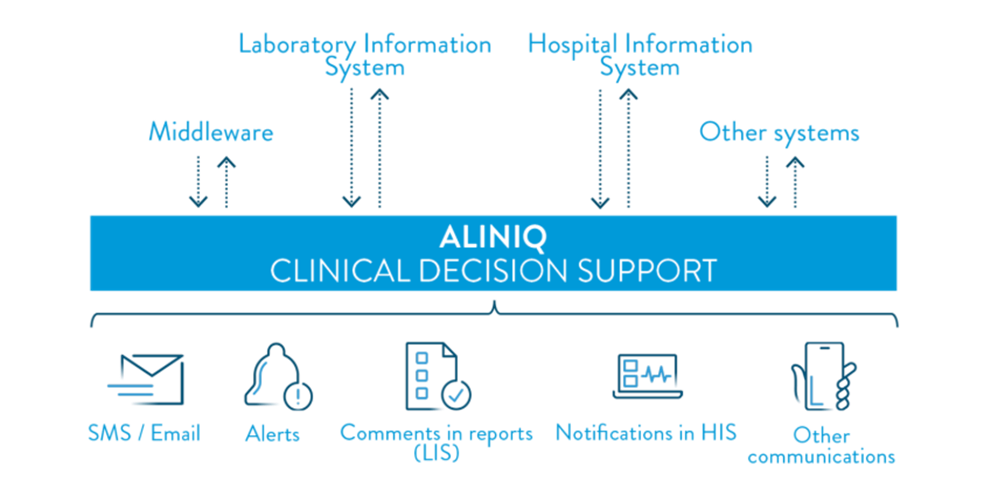
Clinical Decision Support: A Catalyst for Change
Across Asia-Pacific (APAC), healthcare systems face mounting pressures: aging populations, workforce shortages, and fragmented infrastructures. CDS solutions address these challenges head-on. In the Philippines, Hi-Precision Diagnostics—a leading private lab network—leveraged AlinIQ CDS to automate over 95% of wellness report generation within 12 weeks. By embedding over 1,400 clinical rules, the system standardized reporting, reduced inter-physician variability, and freed up clinician time for patient care.
Similarly, in the UK, the AlinIQ CDS-supported Intelligent Liver Function Test (iLFT) pathway improved liver disease diagnosis rates by 43% and saved over £4.6 million annually when scaled. These outcomes underscore the potential of CDS to optimize test ordering, reduce unnecessary procedures, and enhance diagnostic efficiency.
A Vision for the Future
The future of healthcare is connected, data-driven, and patient-centered. Digitalizing diagnostic laboratories—anchored by robust CDS systems—enables hospitals to deliver timely, targeted, and high-quality care. It also positions labs as proactive agents in population health management, capable of identifying disease trends and informing strategic planning.
For healthcare leaders in APAC and beyond, the message is clear: investing in digital diagnostics is not optional—it is essential. By unlocking the full potential of lab data, hospitals can build resilient, high-performing systems ready to meet the demands of tomorrow.