
Optimising hospital energy use through AI: Becamex International Hospital’s case study
)
By forecasting energy demand and identifying areas of unnecessary energy use, the AI system helped reduce energy consumption by 8.1%.
Clinical use cases of artificial intelligence (AI) and machine learning (ML) – such as interpretation of medical images or decision support – have grown rapidly in recent years.
But their potential in improving hospitals’ operational functions remains largely untapped.
Vietnam’s Becamex International Hospital (BIH) saw an opportunity to implement AI/ML in optimising energy usage. The hospital observed that electricity usage patterns showed little variation across busy weekdays, quiet weekends, and holidays, raising concerns about inefficiencies and unexplained consumption peaks.
Electricity accounts for approximately 10–15% of the 310-bed hospital’s total operational costs, equating to around 1 billion VND per month. Even small gains in efficiency can lead to significant cost savings.
Leveraging AI/ML in optimising hospital electricity use
The hospital’s existing infrastructure already synchronises data from main utility meters and departmental sub-meters, provides a strong foundation for implementing AI/ML.
“Our approach aims to transition from static energy schedules to adaptive, data-driven strategies, enhancing efficiency and reducing waste,” said BIH.
The project began with a focus on developing ML models to forecast hospital electricity demand. Algorithms like Random Forest and XGBoost were trained on historical data, including weather, patient volume, and meter readings. These models achieved high accuracy in forecasting, achieving 84.6% with Gradient Boosting and RMSE below 5%.
A dashboard was developed, providing real-time visualisation of energy efficiency across buildings and floors to support the team in benchmarking and implementing changes. For example, during low-demand periods, activities could be consolidated to reduce unnecessary energy use.
The system also detects abnormal energy consumption patterns and triggers timely interventions, minimising delays in addressing wasteful activities.
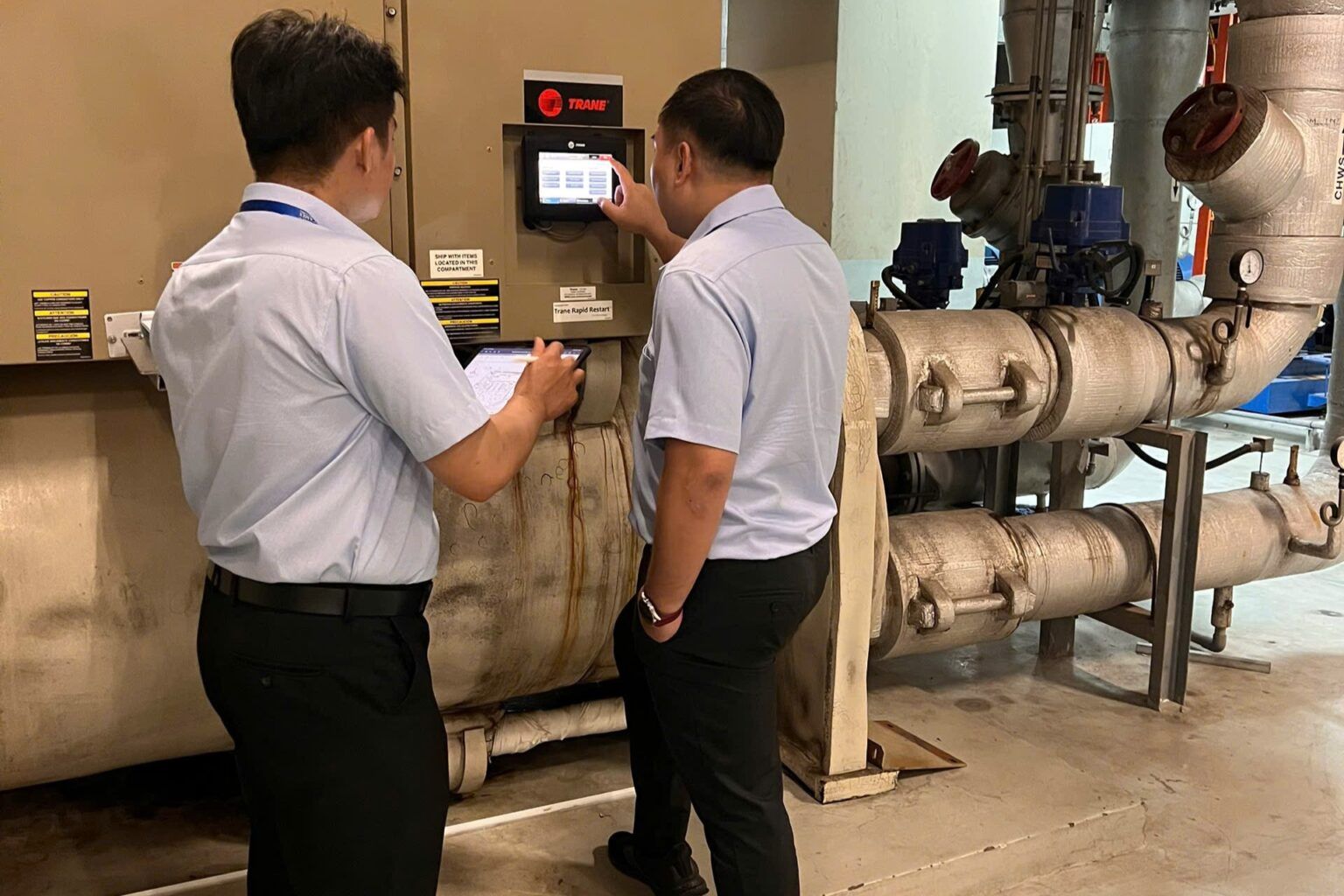
From data to impact with the Plan-Do-Study-Act model
However, accurate predictions alone did not lead to reduced consumption. For example, during a pilot test of switching off the central cooling system on rainy days, overall electricity use remained unchanged.
To translate data to impact, the project team ran two rounds of Plan-Do-Study-Act (PDSA) cycles:
PDSA Cycle 1 – Prediction & Learning
• Plan: Build predictive models using real-time and historical data.
• Do: Launch dashboard and alert system.
• Study: Found high model accuracy but minimal effect from isolated actions.
• Act: Identified need for broader behavioural and operational changes.
PDSA Cycle 2 – Operational Change
• Plan: Pilot in two areas (A3 and A6) with strong monitoring capability.
• Do: Deliver daily reports and recommendations to staff.
• Study: Teams look at key drivers of consumption reduction.
• Act: Focused on simple, consistent changes:
Closing doors to reduce cooling loss
Turning off lights and idle equipment
Setting departmental energy usage targets
Lower energy usage, measurable cost savings
After a month, the two pilot sites saw an 8.1% reduction in energy consumption. The team estimates that a full-scale rollout across the hospital could result in substantial annual savings of up to 976 million VND (approximately 38,000 USD).
Patients benefit as well, the hospital noted.
“Improved control over environmental conditions resulted in quieter zones during low-activity periods, enhancing patient experience.
“This initiative also aligns with environmental goals and strengthens the hospital’s public health mission.”
In conclusion, the hospital underscored the potential of AI/ML in driving hospital operational efficiency at scale.
“This initiative demonstrates that data-driven solutions, when embedded into daily operations, can deliver meaningful, sustainable change, particularly in non-clinical areas often overlooked in hospital improvement efforts. When machine learning is integrated with continuous improvement practices, success is not only achievable, but scalable and enduring.”