

Reflecting on Asian Hospital and Medical Centre’s digital transformation journey: Interview with CIO Frank Vibar
)
From enterprise-wide EMR adoption to a growing data warehouse, AHMC has laid strong digital foundations. CIO Frank Vibar reflects on key milestones, lessons learnt, and the digitalisation roadmap ahead.
Over the past years, Asian Hospital and Medical Center (AHMC) in the Philippines has made considerable progress on its digital transformation roadmap, achieving milestones such as a comprehensive hospital information system roll-out and the establishment of an Enterprise Data Warehouse.
 |
We speak to AHMC’s Chief Information Officer Frank Vibar on the hospital’s digitalisation strategy, the challenges that continue to define healthcare IT leadership, and AHMC’s plans in the coming years towards its vision of a more connected, data-driven, and future-ready hospital. |
On a scale of 1 to 10, where would you say AHMC is at in terms of your vision of its digital transformation? What were the top 3 milestones achieved thus far and their impact?
Mr Vibar: AHMC’s digital transformation has been, above all, a deliberate reinvention of how we deliver care. If we were to gauge our progress on a scale of one to ten, we stand confidently at a six—beyond the halfway point, with a strong foundation already in place and our momentum accelerating. What once felt aspirational is now becoming part of the hospital’s daily reality.
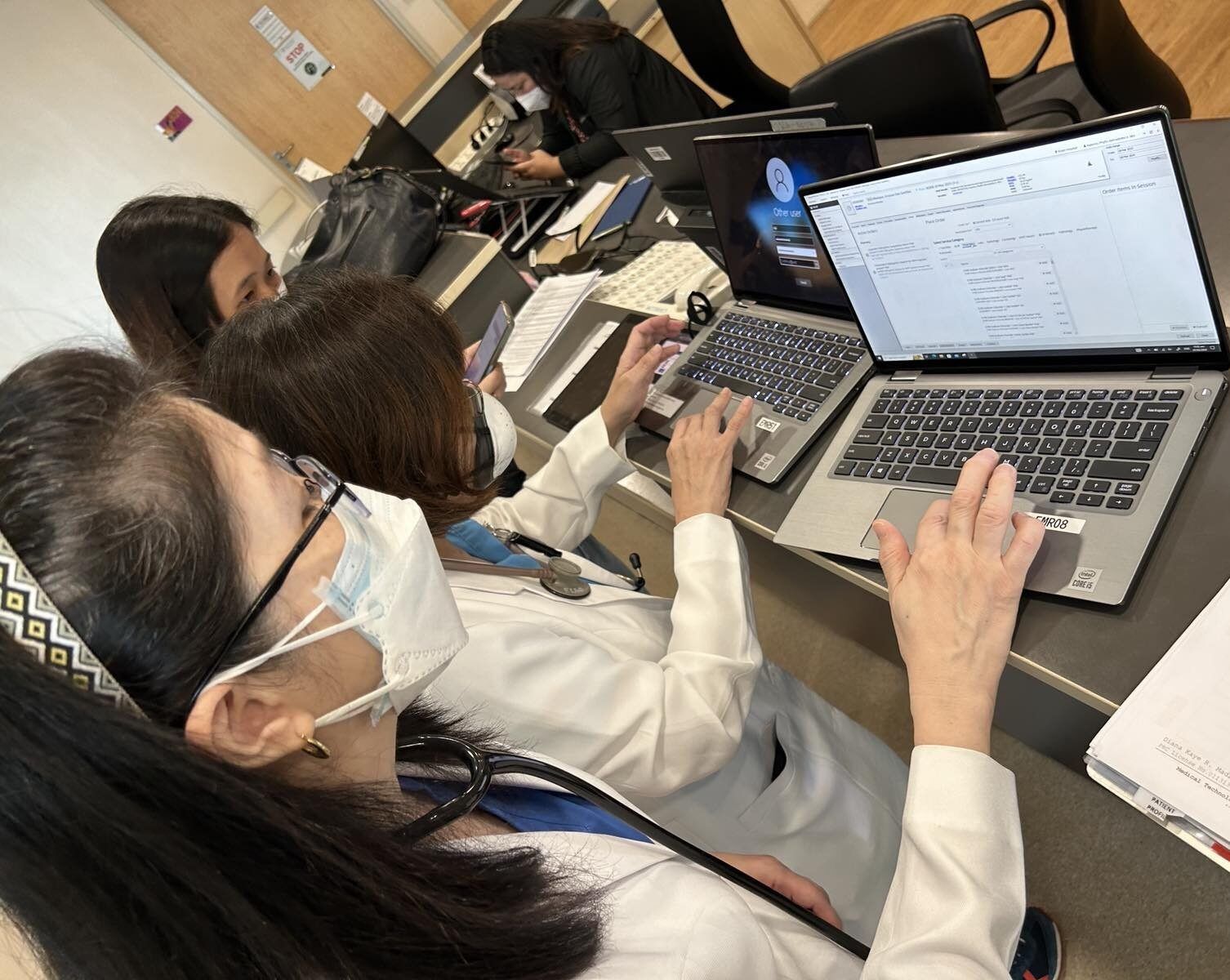
One of the most defining milestones in our journey has been the enterprise-wide adoption of our Hospital Information System (HIS) and Electronic Medical Records (EMR). Reaching more than 90% utilisation across inpatient and outpatient services marked a true turning point for AHMC. For the first time, we gained a unified, real-time view of clinical activity and operational performance. This level of visibility has reshaped how we make decisions: enabling smarter staffing, improving patient flow, and helping us reduce inefficiencies that previously went unseen. Just as importantly, this unified data environment now serves as the backbone for new initiatives, especially those that will rely heavily on AI and advanced analytics.
Equally transformative was the establishment of our Enterprise Data Warehouse. By consolidating data from multiple systems into a single intelligence hub, we empowered leaders, clinicians, and support teams to move from intuition-driven decisions to insights grounded in real-time information. Whether it’s identifying utilisation trends, anticipating peak demand, or monitoring service performance, AHMC now operates with a level of clarity that simply wasn’t possible before.
Another major milestone has been the modernisation of our infrastructure and cybersecurity ecosystem. This work may be largely invisible to our patients, but it underpins every digital experience within the hospital. Strengthening our network backbone, improving WiFi reliability, enhancing cybersecurity resilience, and refreshing our device ecosystem have collectively elevated the speed, security, and dependability of our digital tools.
Across all these efforts, the impact has been unmistakable. Operations are more efficient. Clinical decisions benefit from more consistent and connected data. Patient experiences are smoother, with reduced waiting times and fewer administrative hurdles. Digital transformation has not replaced the human touch, it has freed our teams to focus more fully on patient care, where compassion and expertise matter most.
Yet we also recognise that our journey is far from over. The next phase will take us deeper into interoperability, enterprise-level data intelligence, and the ethical integration of AI into clinical practice. Each advancement brings us closer to our vision of a truly connected hospital, one where clinicians receive the right information at precisely the right moment, and every patient experiences safer, more seamless, and more personalised care.
What would you say are the top 3 key challenges and considerations in driving IT / digital transformation in healthcare? How should CIOs address these?
Mr Vibar: At AHMC, we have learned that driving digital transformation is far more than deploying new systems—it is a profound organisational shift that touches culture, workflows, safety, and ultimately the way we care for patients. From our perspective, three challenges consistently define the journey, each demanding not only technical expertise but thoughtful, people-centred leadership.
The first and most fundamental challenge has always been change management and clinician adoption. Technology by itself rarely fails; what often falters is the transition. Our clinicians work in high-stakes, high-pressure environments where even the smallest change can have a ripple effect on patient care. Any new digital tool—whether an EMR enhancement or an automated workflow—can easily be perceived as another layer of burden unless it clearly improves care or removes friction. For us, the only sustainable path has been partnership. We engage physicians, nurses, and frontline staff early, co-design solutions around real clinical workflows, and provide strong at-the-elbow support as they adapt. When clinicians see firsthand that digital tools make their work safer, simpler, and smarter, adoption becomes a natural outcome.
The second major challenge lies in achieving true integration and interoperability. A hospital is an incredibly intricate ecosystem, powered by dozens of systems that historically have operated in silos. Without seamless connectivity, patient information becomes fragmented, clinicians navigate multiple screens, and valuable insights remain locked away. For AHMC, moving toward a unified digital ecosystem requires disciplined enterprise architecture, long-term integration planning, and strong partnerships anchored in open standards such as HL7 and FHIR. The vision is clear: a complete, reliable patient record that every clinician can trust—one where all data connects effortlessly to support timely, informed decisions.
The third challenge is balancing innovation with uncompromising safety, security, and compliance. In healthcare, the stakes are uniquely high. Our responsibility extends beyond supporting operations—we safeguard the integrity of clinical decisions and the privacy of patients who place their trust in us. As we modernise, we must also fortify. This means strengthening cybersecurity, adopting Zero-Trust principles, hardening endpoints, stress-testing changes before they reach the clinical floor, and continuously educating staff. In our environment, innovation can move fast, but safety must always move faster.
Together, these challenges redefine the role of technology leadership in healthcare. It requires us to be diplomats who bring teams together, architects who design for resilience and scalability, and guardians who protect the core values of patient care.
What are your top focus areas or goals for 2026? In the long-term, what is your vision for AHMC on the IT/digital front?
Mr Vibar: As we look ahead to 2026, AHMC is shaping its digital priorities around a single, unifying ambition: to build a smarter, more connected hospital that elevates clinical excellence and transforms every patient’s experience.
Our first major priority for 2026 is deepening clinical digitalisation, with a renewed focus on meaningful EMR adoption. We envision an EMR that is more than a system our clinicians use, but a trusted ally in care delivery. To get there, we are refining documentation pathways, enhancing order sets, strengthening integration with diagnostics, and continuously improving usability so that digital workflows feel natural, intuitive, and almost invisible. The goal is simple: an EMR that enhances clinical thinking rather than interrupting it.
Our second priority is to build AHMC’s enterprise data and analytics spine. Hospitals generate extraordinary volumes of data, but true value emerges only when that data becomes accurate, connected, and actionable. In 2026, we are expanding our Enterprise Data Warehouse, deploying real-time dashboards across departments, and reinforcing governance to ensure data quality and integrity. This is how AHMC will evolve from being data-rich to genuinely data-intelligent—empowering leaders, clinicians, and operational teams to make smarter, faster decisions every day.
Our third priority is strengthening our infrastructure and cybersecurity backbone. As more of healthcare becomes digital, our foundation must be resilient and future-ready. We are completing network modernisation across all towers, advancing our Zero-Trust security posture, enhancing endpoint and device management, and preparing our environment for the compute-intensive demands of AI. These upgrades ensure that our digital ecosystem remains fast, secure, and stable—capable of supporting the innovations ahead.
A fourth priority centres on enhancing patient-facing digital services. We are expanding the patient portal, simplifying pre-admission and scheduling processes, improving telehealth, strengthening digital queueing, and deepening integration with diagnostics, pharmacy, and results delivery. The goal is a more seamless and predictable care journey—one that feels easier, more transparent, and more connected from the moment a patient seeks care to the moment they return home.
Looking beyond 2026, AHMC’s long-term vision is clear and bold. We are building a fully interoperable hospital where every part of the patient’s story is connected across departments and disciplines.
Ultimately, the future we are shaping is one where clinicians always have the information they need, where AI and data work quietly in the background, and where patients feel supported at every step. Our ambition is both simple and profound: to position Asian Hospital and Medical Center as one of the region’s most digitally mature and future-ready hospitals—innovative, interconnected, and unwaveringly centred on the people we serve.