

How Taiwan’s CMUH built a smarter, safer ICU with AIoT
)
Driven by AI and IoT technology, China Medical University Hospital Taiwan’s Tele-ICU system has cut mortality rates, improved clinical outcomes, and reduced clinician workloads.
At China Medical University Hospital Taiwan (CMUH), an innovative AIoT (Artificial Intelligence of Things) system has cut ICU mortality rates by over 6% in just over a year.
The HiThings Tele-ICU system analyses real-time data from over 1,200 IoT medical devices – such as ventilators, infusion pumps, and patient monitors – with AI-powered tools, ensuring close monitoring of patient conditions and timely interventions.
“The ICU is the most demanding environment in the hospital. Managing patients in severe condition, ICU medical personnel face an overwhelming volume of data from monitors, imaging and medical records, which affects decision-making and contributes to burnout,” said Dr. Wayne Chen Wei-Cheng, Chief Secretary, Office of the Superintendent, and Director, Respiratory Intensive Care Unit at CMUH.
The HiThings Tele-ICU system is backed by a suite of AI-driven clinical decision support tools. One example is ARDiTeX, which is trained to detect and alert clinicians to signs of acute respiratory distress syndrome (ARDS). The tool also provides therapy recommendations based on dynamic changes in the disease.
Another AI tool automatically calculates patients’ nutrition intake based on their daily meals and suggests changes to address any nutrition gaps.
Data is presented through two visualisation interfaces – the first is an overview panel that presents key ICU statistics for easy reference at a glance, such as occupancy, severity level, and patient vital signs. It also highlights patients with infections or severe delirium, and features a tracking map of ICU devices.
On the other hand, the patient digital-twin panel presents detailed physiological indicators of each patient. A 3D human model visually represents the condition of organs, bedside devices, catheters, wounds, and pressure sores, and combines results from the various medical AI applications.
Finally, the system also supports teleconsultations, allowing clinicians to deliver care ‘anytime, anywhere, via any device’ – expanding access to critical care for remote regions across Taiwan.
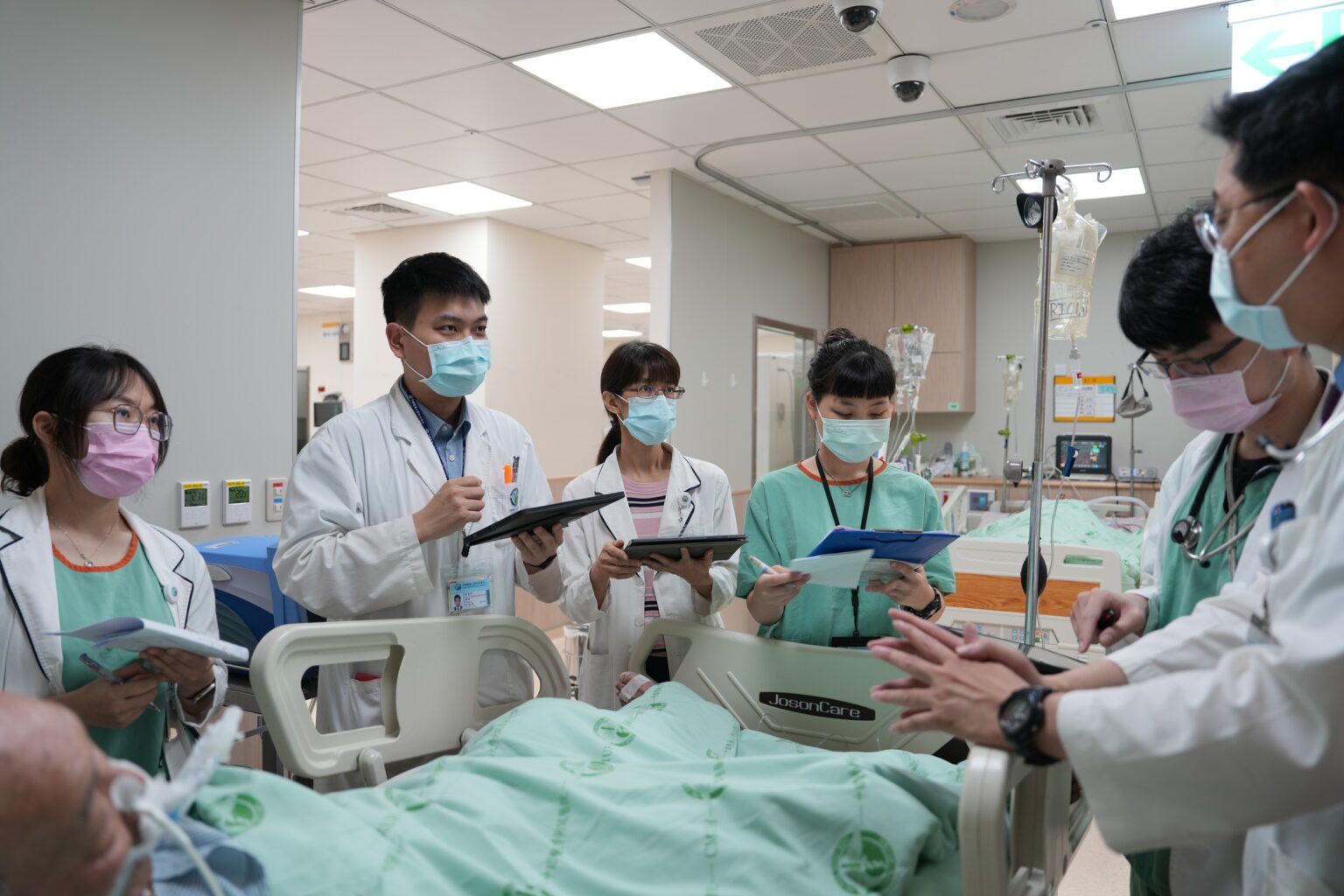
Developing the AIoT system
Developing this unique system called for close collaboration between over 50 stakeholders, from the hospital’s IT, nursing, pharmacy, and clinical teams, to engineers, medical device specialists and partner vendors.
The project began in early 2023, and within a year, the first prototype was piloted in the ICU Respiratory Unit.
“We spent around six months understanding clinical requirements from the team, and another six months testing and refining the prototype to ensure it really supported clinical workflows,” said Dr. Vincent Feng, Director of CMUH’s Digital Transformation Technology Office.
“We also made sure the system is reliable and secure. It has met ISO standards for security and privacy, and regular audits are conducted.”
Strong clinical and operational impact
Over 2024 and 2025, the Tele-ICU system was gradually implemented in six of CMUH’s ICUs, including the paediatric and surgical units.
Early results have been very promising, Dr Feng shared.
With the aid of ARDiTeX, ARDS mortality rate has fallen by 17%. Closer monitoring of patient status has contributed to lowered sepsis and AMI mortality rates, and halved the number of delirium-related incidents.
Overall, ICU mortality rates saw a 6.3% decrease. With over 600 ICU admissions each year, this decrease equates to almost 40 lives saved.
Meanwhile, there was a significant improvement in nutrition management, with 70% more reaching their calorie intake goals and almost 50% reaching their protein goals.
Operationally, clinicians reported a steep 98% decrease in time needed to diagnose strokes or ARDS. Time spent gathering data and creating medical and nursing documentation fell by 44%, 94% and 51% respectively, demonstrating the system’s impact on reducing staff workload, mitigating the risk of burnout and freeing up clinician time for more direct patient care.
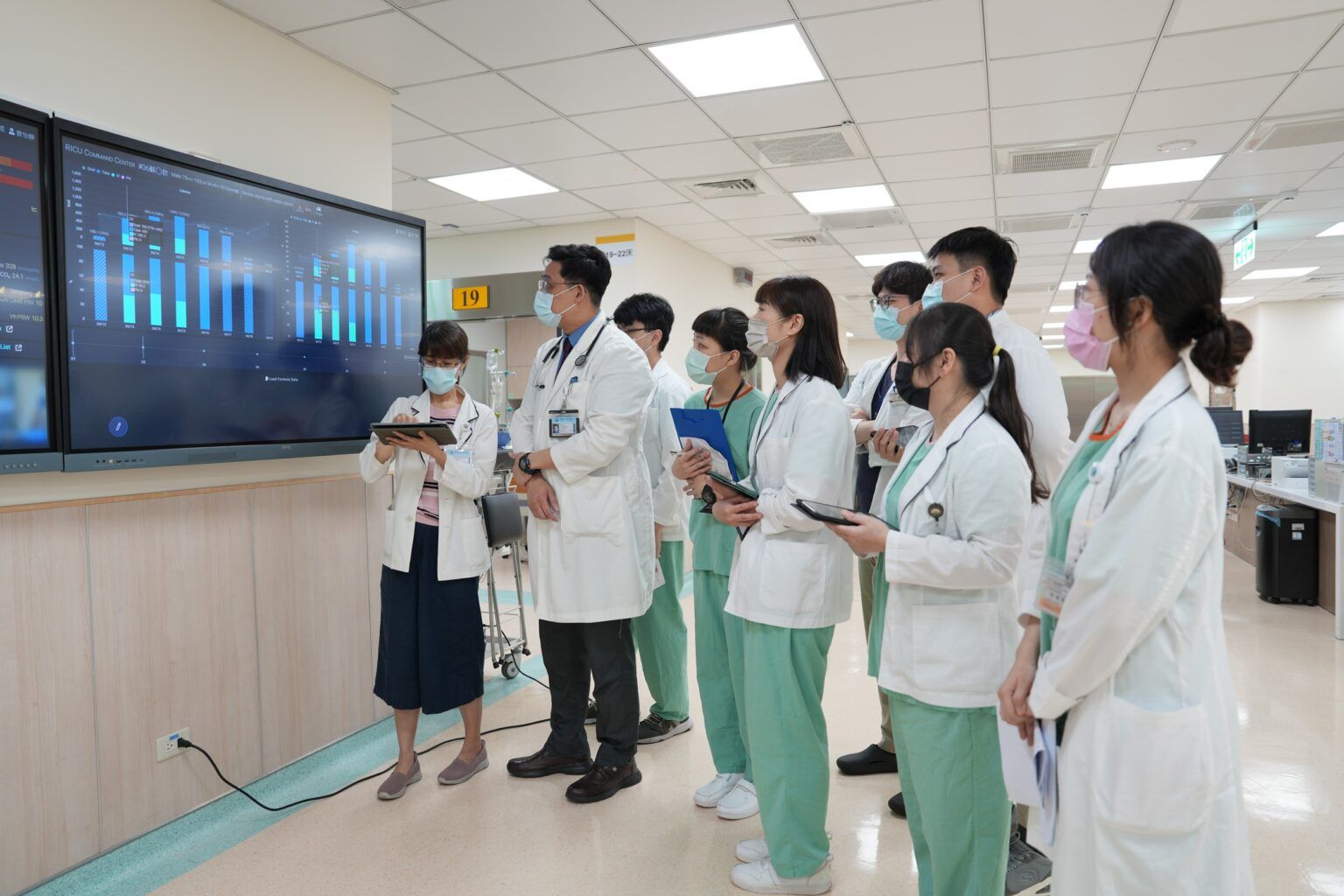
Achieving success in healthcare technology and innovation
The results delivered by HiThings Tele-ICU so far were not by chance. Dr Feng highlighted the importance of early and comprehensive stakeholder engagement. During these sessions, statistics and data were used to help identify common pain points, and align everyone to the same goals.
The hospital had multiple legacy systems which produced data in different proprietary formats. It was crucial to engage with each individual vendor to standardise data into FHIR-compatible formats.
Finally, adopting a design thinking approach anchored innovation around user needs and challenges.
“Sometimes a lot of common challenges stem from the same underlying problem,” he noted. “Our focus was to clearly identify this key problem, and then exploring the various solutions to tackle it.”
“In the beginning, we were quite idealistic in wanting to make a perfect solution, but we realised no solution is perfect – needs are always changing, and the key was to build a prototype that can be continually modified and improved over time.”
In 2026, the team plans to further enhance the system with Retrieval-Augmented Generation (RAG) technology, which will combine the large language model with the hospital’s historical database for more precise disease treatment.
The system will also be expanded to all 10 ICUs in CMUH, and its five affiliated institutions across Taiwan. It may also be adapted for the home care setting, thanks to its scalability and flexibility.
Next up: Eirbot, an AI-powered nursing robot
The AI revolution is poised to enter into a new era – that of physical AI, where AI-powered robots and machines interact with the physical world.
CMUH has taken a bold first step in this direction with its Eirbot, a medical Gen AI robot designed to assist nurses with their daily tasks.
Backed by an AI server integrated with the hospital information system, Eirbot can recognise the patient’s background, identity, and medical history during conversations. This feature enables Eirbot to offer personalised health education and navigation, as well as routine meal ordering and delivery tasks.
“The rise of robots and AI is transforming the future of healthcare,” said Dr Chen. “In the future, each nurse may be accompanied by a robot to carry out the manual, logistical tasks, so he or she can focus on the patient.”
Dr Feng concluded: “Doctors and nurses are impossible to replace. A smart healthcare system leverages innovative tools like AI and robotics to reduce staff workload, support faster diagnosis and deliver better treatment. As our chairman and superintendent often say: AI will not replace doctors, but doctors who don’t understand AI will be replaced.”