

UMMC explores 5G-enabled holomedicine for surgical training and remote proctoring
)
The use of extended reality (XR) opens new possibilities in immersive surgical training and remote proctoring, says Dr. Julius Goh Liang Chye, Clinical Specialist ENT at Universiti Malaya Medical Centre.
Through the use of extended reality (XR) supported by 5G high-speed networks, Universiti Malaya Medical Centre (UMMC) conducted its first ENT (Ear, Nose and Throat) surgery streamed live to a multi-country audience last December.
The audience of 25 comprised medical students and international specialists from the United States as well as from across Asia and other states in Malaysia. Connected via apoQlar’s immersive ‘Holomedicine®’ platform – a term describing the use of augmented, mixed, or virtual reality in medicine – participants were offered a real-time livestream of the 40-minute surgery, led by Professor Dr. Mohd Zulkiflee bin Abu Bakar, Director of UMMC, Otorhinolaryngologist and Head & Neck Oncosurgeon; and Dr. Julius Goh Liang Chye, Senior Lecturer and Clinical Specialist ENT.
The successful demonstration has opened up new possibilities for medical education and proctoring at UMMC, said Dr. Goh, who leads the hospital’s ENT robotic surgery programme.
“UMMC is a top teaching hospital in the country, and quality medical education is one of our key aims,” he noted.
“We are constantly looking for ways to make our education programme more effective and efficient. The XR platform has emerged as a way to deliver immersive learning experiences, without the hassle of travel or the capacity limitations of physical operating theatres. It allows us to share case findings, complications, and key learnings more easily with our students.”
At any one time, around 30 to 40 residents are enrolled in UMMC’s ENT specialist training programme, but there are limited surgical robotic systems available for hands-on practice. XR overcomes this limitation by allowing students to observe surgical steps from the surgeon’s point of view, raising the efficiency of training without compromising educational quality.
Beyond education, the platform also supports remote clinical collaboration and medical knowledge exchange. Surgeons in the operating room can experts based in other parts of the world for advice or second opinions, while sharing surgery progress in real-time – ultimately benefiting patients and improving clinical outcomes.
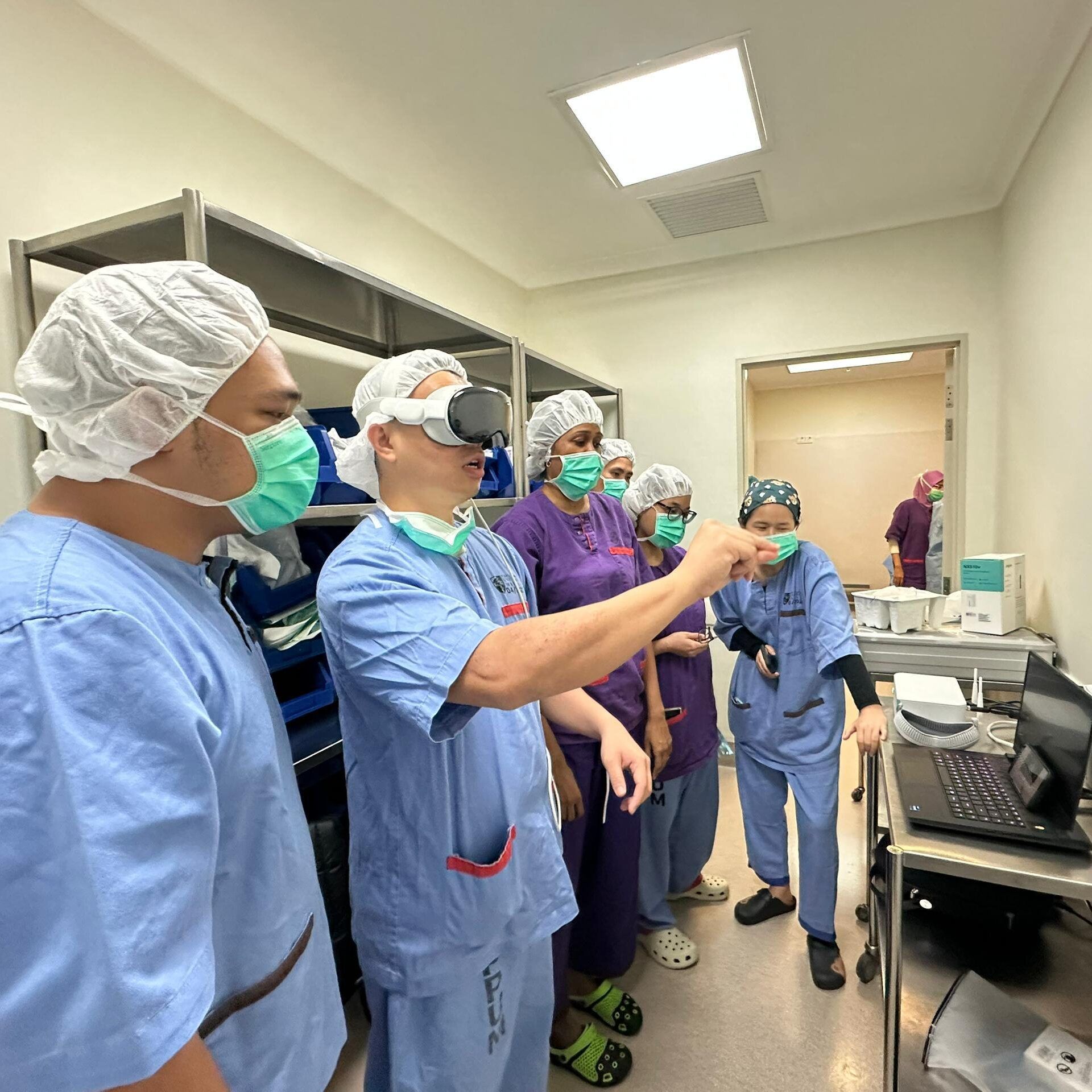
Behind the successful holomedicine pilot
Feedback from participants on the pilot surgery livestream was largely positive, said Dr. Goh, with no reported issues on network latency or image quality.
It was the result of almost three months of preparation by the UMMC project team.
A key priority was upgrading network infrastructure to support high-definition, low-latency streaming.
“Network reception in operating theatres located underground or within dense building clusters can be less than ideal,” said Dr Goh. “We worked closely with our network provider, CelcomDigi, to install low-latency 5G transmission networks around the hospital.”
The biggest challenge was incorporating the required software within the robotic and holomedicine system. This process required a lot of fine-tuning and support from software engineers and device providers.
The team also had to develop clinical and operational protocols from scratch.
“For example, what if a surgery goes wrong? Do we stop the stream or do we continue? These are scenarios we need to consider in detail,” Dr. Goh pointed out.
UMMC plans to hold additional live surgical demonstrations in other specialties, including urology and colorectal surgery. These pilots will generate further insights into the safe and effective integration of holomedicine in live clinical environments.
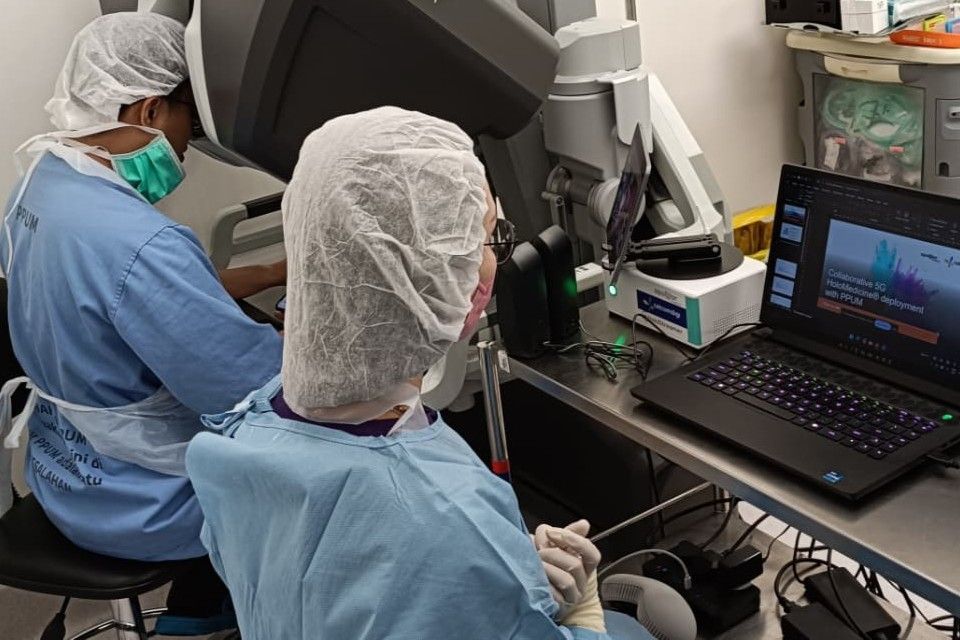
Future of holomedicine in Asia
In Asia, holomedicine has seen growing adoption in recent years. Institutions such as Singapore’s National University Health System, NUS Yong Loo Lin School of Medicine, and Hong Kong’s Prince of Wales Hospital, are among those which have introduced the technology in surgical training, preoperative planning and intraoperative guidance. This trend is backed by maturing 5G infrastructure enabling high-bandwidth, low-latency connectivity.
Based on current trajectories, interest and adoption into holomedicine is expected to grow in the coming years, Dr. Goh noted. Nonetheless, wider adoption is dependent on several factors – including sustained production by device companies, continued support from telecommunications providers, buy-in from hospital leadership, and effective collaboration among regulators and stakeholders.
Looking into the long-term, the technology could evolve to allow surgeons to conduct procedures remotely, outside the physical operating theatre, Dr. Goh suggested.
“This would help close gaps in access to care,” he said. “In some cases, patients are not able to travel to UMMC for surgery, and our surgeons are not able to travel to their locations. The number of robotic surgical systems is also limited. If we can deliver surgical services without the limitations of physical distance, we can significantly expand access to care for patients across Malaysia.”
*This project received in-kind support from Celcom Digi, including routers, 5G network connectivity, and engineering expertise.
*The team has received no financial compensation, and has no personal financial ties with the suppliers involved in this project.